
`
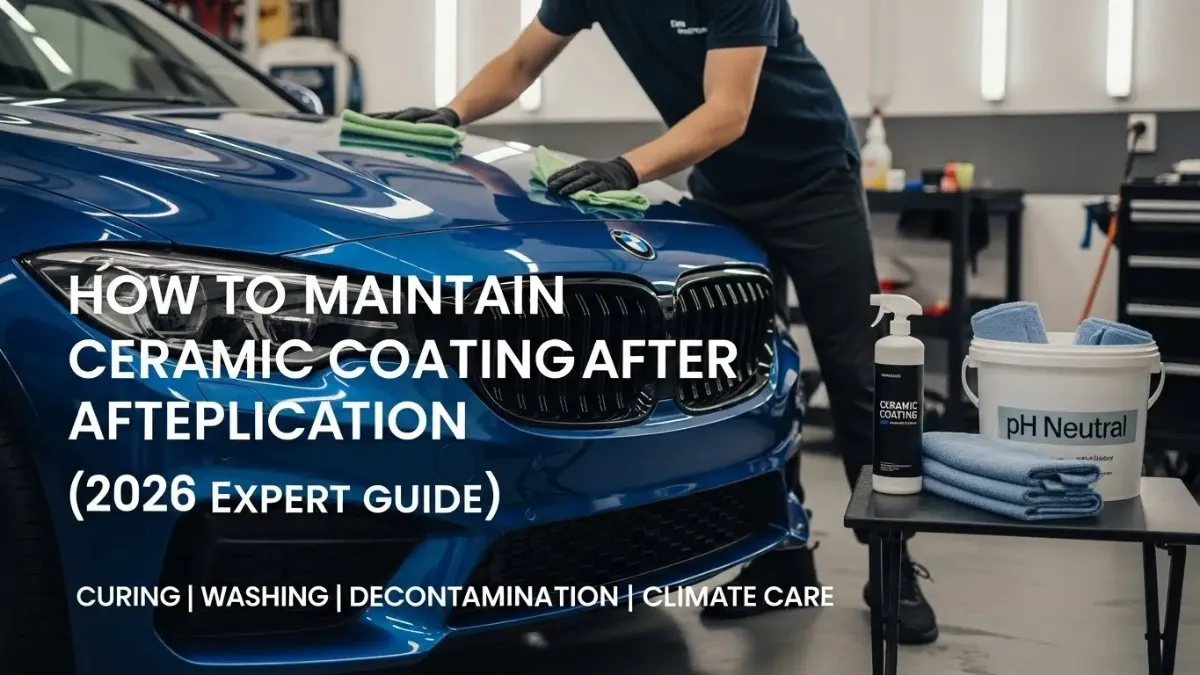
How to Maintain Ceramic Coating After Application: The Definitive 2026 Guide
Executive Summary
Ceramic coating (SiO₂ layering) provides superior hydrophobicity and chemical resistance compared to traditional wax, but it requires a disciplined maintenance protocol to preserve its cross-linked structure. This guide outlines the Full Lifecycle Maintenance Protocol, ranging from the initial curing phase (first 24 hours) to long-term decontamination strategies, ensuring maximum longevity and warranty compliance.
Understanding the Ceramic Coating Lifecycle
Before establishing a maintenance routine, it is vital to understand what happens to the coating after application.
- Chemical Cross-Linking:
Upon application, the ceramic coating undergoes a curing process where the polymer chains cross-link to form a hard, protective shell.
- Hydrophobic Degradation:
Over time, UV exposure, road grime, and alkaline washes degrade the SiO₂ (Silicon Dioxide) top layer, reducing water beading (contact angle).
- Surface Contamination:
While the coating protects the clear coat, it is susceptible to bonding with industrial fallout (iron particles) and organic contaminants (sap/bio-waste).
Phase 1: The Critical Curing Period
The curing period is the most vulnerable phase of the coating's life. Incorrect care here can cause permanent etching or inhibit the hardening process.
The First 24 Hours
During this window, the coating is chemically active and soft.
- Moisture Avoidance:
Do not expose the vehicle to rain, standing water, or direct washing. Water trapped in the uncured layer can leave "water spot shadows" that require polishing to remove.
- Contaminant Protocol:
Avoid parking under trees or overhead power lines. If bird droppings (pH 3.0–4.5) or tree sap land on the paint, do not wipe. Rinse immediately with a gentle stream of water or use a ceramic maintenance spray to lubricate the surface before gently lifting the contaminant with a microfiber towel.
- Chemical Isolation:
Keep the vehicle away from high-pH (alkaline) and low-pH (acidic) substances. This includes automatic car washes and household cleaners.
Days 2–14: The Sub-Curing Phase
The coating continues to harden, gaining scratch resistance.
- Washing:
Only hand washing is permitted. Use pH-neutral shampoo (pH 6.0–7.0).
- Drying:
Use high-pile microfiber towels or forced air (leaf blower) to prevent friction.
- Environmental Exposure:
Limit direct exposure to extreme sunlight if possible, as rapid temperature fluctuations can affect the curing uniformity.
Phase 2: Regular Maintenance Protocols
Once fully cured (post-14 days), the goal is to maintain the static contact angle (beading) and prevent surface abrasion.
Washing Frequency & Method
Frequency should be adjusted based on environmental exposure, but the industry standard is bi-weekly.
The Three-Bucket Method (Gold Standard)
To mitigate swirl marks and surface marring:
- Bucket 1 (Wash):
pH-neutral car shampoo and water.
- Bucket 2 (Rinse):
Clean water (no soap) to rinse the wash mitt.
- Bucket 3 (Wheels):
Dedicated wheel bucket (separate to prevent brake dust cross-contamination).
Use Grit Guards in the bottom of all buckets to trap dirt.
Wash Guidelines
- Sunlight:
Always wash in shade or low light. Washing in direct sun causes water to evaporate instantly, inducing hard water spots (calcium deposits).
- Pressure:
Use a pressure washer for pre-rinsing to dislodge loose grit without touching the paint.
- Drying:
Use a dedicated plush microfiber drying towel (600–900 GSM). Avoid "chamois" leather as it can trap dirt particles.
Maintenance Boosters (SiO₂ Sprays)
Ceramic boosters are not wax; they are diluted forms of the coating designed to refresh the hydrophobic layer.
- Frequency:
Every 3–4 months for daily drivers; 6 months for garage queens.
- Application:
Apply to a wet or dry panel, wipe immediately with a microfiber cloth, and buff to a high gloss.
- Brand Consistency:
Use boosters from the same manufacturer as the coating to ensure chemical compatibility.
Phase 3: Deep Cleaning & Decontamination
Regular washing removes surface dirt, but not embedded contaminants. A "Reset Wash" is required when water beading diminishes.
- Chemical Decontamination (Iron Removal)
Frequency:
Every 6 months or as needed.
Process:
Apply an Iron Remover (sodium thioglycolate solution) to the paint.
Reaction:
The chemical turns purple/red upon contact with ferrous particles (brake dust).
Action:
Allow to dwell for 3–5 minutes, then pressure rinse thoroughly.
- Mechanical Decontamination (Claying)
Frequency:
Annually or if the paint feels rough.
Tool:
Use a Synthetic Clay Mitt or Medium-Grade Clay Bar.
Lubrication:
Use generous amounts of clay lubricant or shampoo suds.
Technique:
Glide the clay over the surface in straight lines. Do not apply heavy pressure.
Note: Clay bars remove embedded contaminants but also remove a microscopic layer of the ceramic topcoat. Always follow claying with a Booster Spray to replenish the protection.
Phase 4: Climate & Regional Specifics
Tropical & Humid Climates (e.g., Southeast Asia, Florida)
Challenge:
High humidity accelerates mold growth; intense UV degrades the polymer; frequent rain leaves acidic water spots.
Protocol:
Wash weekly. Use a ceramic booster every 3 months. Ensure the vehicle is dried completely after rain to prevent acid rain etching.
Cold & Snowy Climates (e.g., Canada, Northern Europe)
Challenge:
Road salt (Calcium Chloride/Magnesium Chloride) is highly corrosive and chemically aggressive to coatings.
Protocol:
Wash weekly during winter months. Focus on the wheel wells and undercarriage. Apply a thick layer of ceramic booster in late autumn (October/November) to create a sacrificial barrier against salt.
Urban & Industrial Zones
Challenge:
Industrial fallout (metal particulates from brakes/trains) and rail dust.
Protocol:
Perform iron removal every 4 months. Parking in a garage is critical to minimize exposure.
Prohibited Practices & Void Risks
| Prohibited Practice | Reason | Consequence |
|---|---|---|
| Automatic Car Washes (Brush/Touchless) | Brushes cause micro-marring; harsh detergents strip SiO₂. | Loss of gloss; swirl marks; reduced hydrophobicity. |
| Dish Soap / Degreasers | High pH (11.0–12.0) strips oils and protective layers. | Immediate degradation of water beading. |
| Traditional Wax | Wax creates a barrier; boost sprays cannot penetrate wax. | Wasted effort; uneven finish. |
| Abrasive Polishes | Cutting compounds remove the coating layer. | Permanent removal of protection requires re-coating. |
Annual Professional Inspection
A "Ceramic Inspection" is recommended annually to assess coating health.
- Water Beading Test:
Assess the contact angle of water droplets.
- Thickness Check:
Measure coating thickness (mils) using a paint depth gauge.
- Correction:
A professional can perform a "Single Stage Polish" to remove surface defects without cutting through the coating, followed by a refresh application.
Frequently Asked Questions
Can I wash my car 7 days after ceramic coating?
No. You should avoid water and washing for the first 24 hours. Between days 2 and 14, you may wash gently with pH-neutral soap, but avoid high-pressure water directly on the surface and do not dry with force.
Does ceramic coating remove the need for wax?
Yes. Ceramic coating replaces the need for traditional carnauba wax. In fact, waxing a ceramic-coated car is discouraged as it can hinder the performance of maintenance sprays.
Why is my ceramic coating not beading water?
If beading stops, the surface is likely covered in contaminants or the hydrophobic top layer has worn off. Perform a Decontamination Wash (Iron remover + Clay) followed by a Ceramic Boost Spray application.
How long does ceramic coating last?
Professional-grade coatings typically last 2 to 5 years depending on maintenance and environmental exposure. DIY consumer-grade kits generally last 6 to 12 months.
Is it safe to use a clay bar on ceramic coating?
Yes, but with caution. Use a synthetic clay mitt (fine grade) and plenty of lubrication. Aggressive claying can mar the coating. Always apply a booster spray after claying.
`